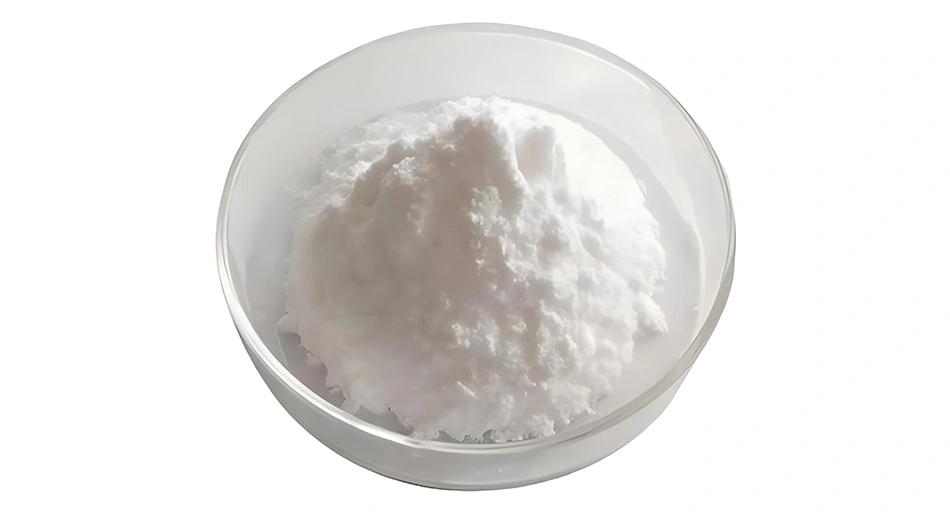
Creatine monohydrate powder quality should be evaluated through a combination of product identity verification, purity testing, particle size analysis, contaminant controls, and batch documentation. These checks help confirm that incoming raw materials meet agreed specifications before production begins.
A high assay result alone does not establish overall quality. Two batches with similar purity may differ in particle size distribution, impurity profiles, microbiological results, packaging integrity, or traceability. A structured quality checklist helps purchasing and quality assurance teams identify these differences and make consistent acceptance decisions.

Start with an Approved Creatine Monohydrate Specification
An approved specification is the reference document used to determine whether a raw material meets the buyer's quality requirements. It should define measurable acceptance limits before a sample or commercial batch is approved.
Before reviewing test results, confirm the product identity. Creatine monohydrate is associated with CAS No. 6020-87-7, and its molecular formula is C4H11N3O3. These identifiers can be cross-checked against the PubChem creatine monohydrate record.
The specification should identify the following information:
Product name, CAS number, and intended application.
Appearance and identification requirements.
Assay or purity limits and the applicable test method.
Relevant impurity and contaminant limits.
Particle size requirements, where necessary.
Microbiological acceptance criteria, where applicable.
Packaging, storage, and shelf-life requirements.
For example, Yanggu Huatai's published creatine monohydrate powder specification lists an assay of at least 99.0%, lead at no more than 0.5 mg/kg, and inorganic arsenic at no more than 0.25 mg/kg. These are supplier-published specifications, not universal acceptance limits for every product or market. Buyers should compare each result against the specification agreed upon for their own application and destination market.
Evaluate Purity Beyond the Headline Assay
Assay measures the amount of the target substance according to a specified analytical method. It is also an important quality indicator.
When reviewing creatine monohydrate purity, check three areas.
Product identity: Confirm that the test identifies creatine monohydrate rather than relying only on the product label or supplier declaration.
Assay result: Check the reported value, unit, method, acceptance limit, and whether the result is reported on an as-is or another defined basis.
Related impurities: Review the impurity tests relevant to the manufacturing process, product specification, and intended use.
The exact tests required depend on the product specification, applicable regulations, and buyer's quality system. Do not assume that every supplier uses identical methods or that the same acceptance limits apply to all markets.
Assess Particle Size with Measurable Data
Particle size distribution describes the range of particle sizes present in a powder. For creatine monohydrate, it can affect powder flow, blending uniformity, dispersibility, and the texture of the finished product.
Terms such as "fine powder" and "micronized creatine" are not sufficiently precise for technical purchasing. Buyers should request a defined particle size specification when particle size is important to formulation performance.
Understand D10, D50, and D90
Particle size reports may use three common percentile values:
D10: 10% of the measured particle population is at or below this size.
D50: The median particle size; 50% of the measured population is at or below this size.
D90: 90% of the measured particle population is at or below this size.
These values help describe the distribution more completely than a single average. However, the interpretation depends on whether the method reports a number-, volume-, or mass-based distribution.
For example, two creatine powders could have the same D50 but different D90 values. One may contain a wider distribution of particle sizes, potentially affecting blending or handling behavior.
The appropriate measurement method depends on the powder and the agreed specification. Analytical sieving may be suitable for some particle ranges, while laser diffraction can be useful for broader distributions or finer powders. The United States Pharmacopeia's Powder Fineness chapter discusses particle size distribution estimation and relevant measurement approaches.
When evaluating particle size data, confirm:
The measurement method and sample preparation procedure.
The reported distribution basis and units.
The required particle size range and acceptance limits.
Whether the result represents the actual production batch.
Whether the material performs adequately in the intended formulation.
A finer powder is not always better. The target distribution should be determined by product requirements and confirmed through appropriate testing.
Verify the Certificate of Analysis (COA)
A Certificate of Analysis (COA) reports test results for a specific batch of material. It should allow the buyer to connect the test results with the product received and the specification used for approval.
A COA should not be accepted solely because it contains a company logo or reports a high purity value. Review its completeness, traceability, and consistency with the purchase specification.
Use this checklist before approving a batch:
COA Item | Verification Question |
Product identity | Does the product name and CAS number match the purchase order? |
Batch number | Does it match the label and shipping documents? |
Test results | Are actual results reported where required? |
Acceptance limits | Are results within the approved specification? |
Test methods | Are the methods identified or traceable to controlled procedures? |
Dates | Are the relevant testing, release, or issue dates recorded? |
Responsible organization | Is the issuing laboratory or quality unit identifiable? |
Document integrity | Are revisions, signatures, or approvals handled appropriately? |
A specification sheet and a COA serve different purposes. The specification defines the agreed requirements, while the COA records the results for a particular batch. Both documents may be needed for an effective release decision.
If a COA contains missing results, inconsistent batch numbers, unclear units, or values outside the agreed limits, request clarification before approving the material.
Check Contaminants and Microbiological Requirements
Contaminant testing should be selected according to the raw material, manufacturing process, intended use, and applicable market requirements. A general statement such as "high purity" does not replace specific test results.
For creatine monohydrate, buyers may need to review heavy metals, relevant process-related impurities, and microbiological parameters. The applicable limits should be stated in the approved specification rather than assumed from another supplier's product.
When reviewing contaminant data, check whether the report includes:
The measured result and its unit.
The relevant acceptance limit.
The test method or method reference.
The reporting or quantification limit, when relevant.
A clear distinction between a result below the reporting limit and a result that was not tested.
A blank field should not be interpreted as a passing result. Likewise, "not detected" should be interpreted in the context of the method's detection capability and the specification.
If a test result is outside the approved limit, place the batch on hold and follow the organization's nonconformance procedure. Do not release it based on a favorable assay result alone.
Confirm Batch Consistency and Sampling Quality
A compliant COA is useful only when the sample and test results adequately represent the batch being evaluated. Sampling and traceability are therefore essential parts of raw material quality assurance.
For a new supplier, buyers may choose to review a representative sample, verify selected parameters independently, and compare the results with the supplier's documentation. The scope of testing should reflect risk, order size, supplier history, and internal quality procedures.
For ongoing supply, monitor whether results remain consistent across successive batches. Relevant trends may include assay, particle size distribution, moisture-related parameters, impurities, and microbiological results.
A batch review should also confirm that:
The sample is traceable to the identified lot.
Sampling follows a defined and appropriate procedure.
Laboratory methods are suitable for their intended purpose.
Out-of-specification results trigger a documented investigation.
Changes to specifications or manufacturing processes are reviewed before acceptance.
Consistency does not mean every batch must produce identical numerical results. It means each batch meets the approved requirements.
Inspect Packaging, Storage, and Material Condition
Even material that meets its initial test specification can be compromised by poor handling, damaged packaging, or unsuitable storage. Packaging inspection should therefore form part of the incoming quality checklist.
Confirm that containers are sealed, labels are legible, and batch identification is consistent across the packaging and documents. Review the supplier's stated storage conditions and shelf life before placing the material into inventory.
For each delivery, inspect for:
Torn, punctured, or unsealed packaging.
Signs of moisture exposure or contamination.
Missing or inconsistent batch labels.
Unexpected discoloration or unusual material condition.
Differences between the delivered quantity and shipping documents.
Do not rely on appearance alone to establish purity or safety. If a package is damaged or the material differs from the approved sample, isolate the affected goods and request a documented assessment.
For manufacturers using creatine in sports nutrition supplement formulations, the incoming material should also be evaluated against the processing, blending, packaging, and shelf-life requirements of the finished product.
Use a Clear Batch Acceptance Checklist
A standardized checklist makes quality decisions easier to document and repeat. It also helps purchasing and quality assurance teams apply the same criteria to samples, first orders, and routine deliveries.
Before releasing creatine monohydrate powder for production, confirm the following:
Product name, CAS number, and supplier identity are correct.
The approved specification and revision are available.
Assay meets the agreed acceptance limit.
Relevant impurity and contaminant tests meet requirements.
Particle size data meet the agreed range, if specified.
The batch-specific COA is complete and traceable.
Packaging and labels match the delivery documents.
Storage conditions and shelf life are acceptable.
Required independent tests or additional reviews are complete.
Any deviations have been investigated and formally resolved.
The batch should be released only when all required criteria have been satisfied or an authorized, documented disposition has been made under the applicable quality system.
Conclusion
Evaluating creatine monohydrate powder quality requires more than checking a single purity percentage. Buyers should verify product identity, assay, relevant impurities, particle size distribution, COA accuracy, batch traceability, and packaging condition against an approved specification.
For consistent commercial supply, define measurable requirements before ordering and apply the same documented acceptance process to incoming batches. This approach helps reduce material discrepancies, supports reproducible formulation performance, and provides a stronger basis for supplier quality management.
FAQ
Q1:What purity should creatine monohydrate powder have?
The required assay depends on the approved product specification and intended application. Yanggu Huatai's published specification lists an assay of at least 99.0%, but buyers should confirm the current specification and batch-specific result.
Q2:Why is particle size important in creatine monohydrate powder?
Particle size can influence powder flow, blending, dispersibility, and finished-product texture. The appropriate range should be defined according to formulation requirements rather than assuming finer powder is always better.
Q3:What should a creatine monohydrate COA include?
A COA should identify the product and batch, report the required test results, and provide sufficient information to compare those results with the approved specification. Test methods, dates, and responsible issuing parties should also be traceable.
Q4:Does a 99% assay guarantee that creatine powder is high quality?
No. Assay alone does not establish particle size suitability, contaminant control, microbiological quality, packaging integrity, or batch traceability.
Q5:How can buyers verify a creatine monohydrate batch?
Check the batch-specific COA, compare the results with the approved specification, inspect the packaging and labels, and perform additional testing when required by the quality plan or risk assessment.
Q6:Should every batch of creatine monohydrate be independently tested?
The testing approach should follow the buyer's quality system, risk assessment, applicable regulations, and supplier history. Independent verification may be particularly useful during supplier qualification, after significant changes, or when discrepancies arise.
 English